
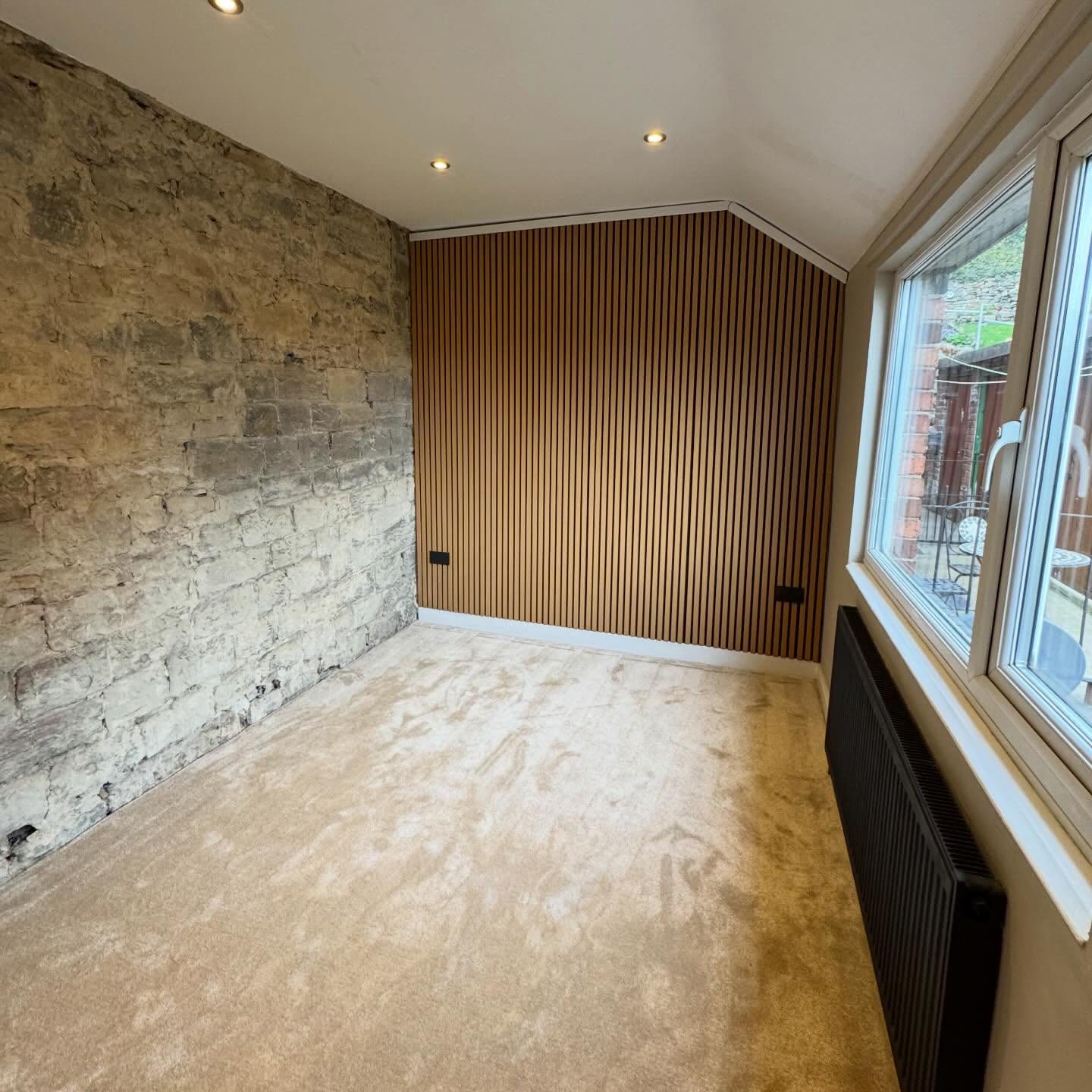
Domestic and commercial electrical installations
New circuits, sockets, switches and full installations for homes and business premises.
In short
Electrical installation work covers anything that adds to or alters the fixed wiring of a building: extra sockets, a new circuit for a cooker, hob, shower or garden supply, moving accessories during a refurbishment, or wiring a property from scratch. Every new circuit is designed for the load it will carry, protected appropriately, tested on completion and certificated, whether it is one socket in a home office or a full commercial fit-out.
Most installation work starts because something has changed. A room is being used differently, an appliance has arrived that needs its own circuit, or a business has taken on premises wired for something else entirely. The job is to add what is needed without overloading what is already there, which is why the existing installation gets looked at first.
Installation work we take on
- Extra sockets, so extension leads and adaptors are not doing a permanent job
- Dedicated circuits for cookers, hobs, showers, hot tubs and garden supplies
- Home office and garden room wiring, including data and networking containment
- Kitchen and bathroom refurbishments, including appliance circuits and extraction
- Commercial fit-outs: shops, offices, salons, workshops and units
- Supplies to outbuildings, garages, workshops and summer houses
What the job involves
Every property is different, but the shape of the work is usually the same. Here is how a typical domestic and commercial electrical installations job runs.
Understand what it is for
What is going in, how much it draws and how it will be used decides the circuit, so the conversation starts there rather than with a cable size.
Check what is already there
The board, the spare capacity and the condition of the existing installation are checked. There is no sense adding a circuit to a board that cannot take it.
Agree positions and routes
Accessory positions and cable routes are agreed before work starts, with cables kept in the safe zones so they are not somewhere a future shelf bracket will find them.
Install to standard
Circuits are installed to BS 7671, with the right cable size for the load and the route, correct protective devices, and containment where it belongs.
Test, certify and label
Everything is tested, an Electrical Installation Certificate or Minor Works Certificate issued, and the board labelled so the next person can tell what is what.
Want someone to take a look?
Call 07557 448945 or send a photo on WhatsApp and you will get a straight answer on what it needs.
Domestic and commercial electrical installations near you
S. Sparham Electrical covers Derbyshire and Nottinghamshire. Pick your area for local detail, or call 07557 448945 if you are not sure whether you are in range.
Frequently asked questions
Can I add sockets to an existing circuit?
Often yes. A ring final circuit will usually take additional sockets, provided the circuit is in good condition, correctly protected and not already heavily loaded. It gets tested first, because extending a circuit that already has a fault on it just spreads the problem.
Does adding a socket need building control approval?
In England and Wales, adding a socket to an existing circuit outside a special location is not normally notifiable. A new circuit is, and so is any work in a bathroom or shower room. Notifiable work is either self-certified by an electrician registered with a competent person scheme or notified to building control first.
Do you do commercial as well as domestic work?
Yes. S. Sparham Electrical covers domestic, commercial and industrial work, from a shop or salon fit-out through to workshops and units. Commercial jobs are usually planned around opening hours so the trading day is not lost.
Can you wire a garden room or outbuilding?
Yes. A supply to an outbuilding is a dedicated circuit with cable rated and installed for the route, whether that is buried armoured cable or a run through the building. It is tested and certificated in the same way as any other circuit.
What certificate do I get for a small job?
An addition or alteration to an existing circuit gets a Minor Electrical Installation Works Certificate. A new circuit gets a full Electrical Installation Certificate. Both carry the test results and both are worth keeping.
Held by Stephen Sparham. Every job that needs one is tested and certificated. More about our qualifications