
Bathroom lighting
Zone-rated lighting, mirrors and extraction, wired to the regulations.
In short
Bathroom lighting is the one area where the rules decide what you can buy. BS 7671 divides a bathroom into zones by distance from the bath and shower, and a fitting has to carry an IP rating suitable for the zone it sits in: broadly IP65 inside the shower, IP44 within a couple of metres of it, and ordinary fittings only well away from both. Everything in a bathroom also needs RCD protection. The practical result is that a fitting you like from a general lighting range often cannot go where you want it.
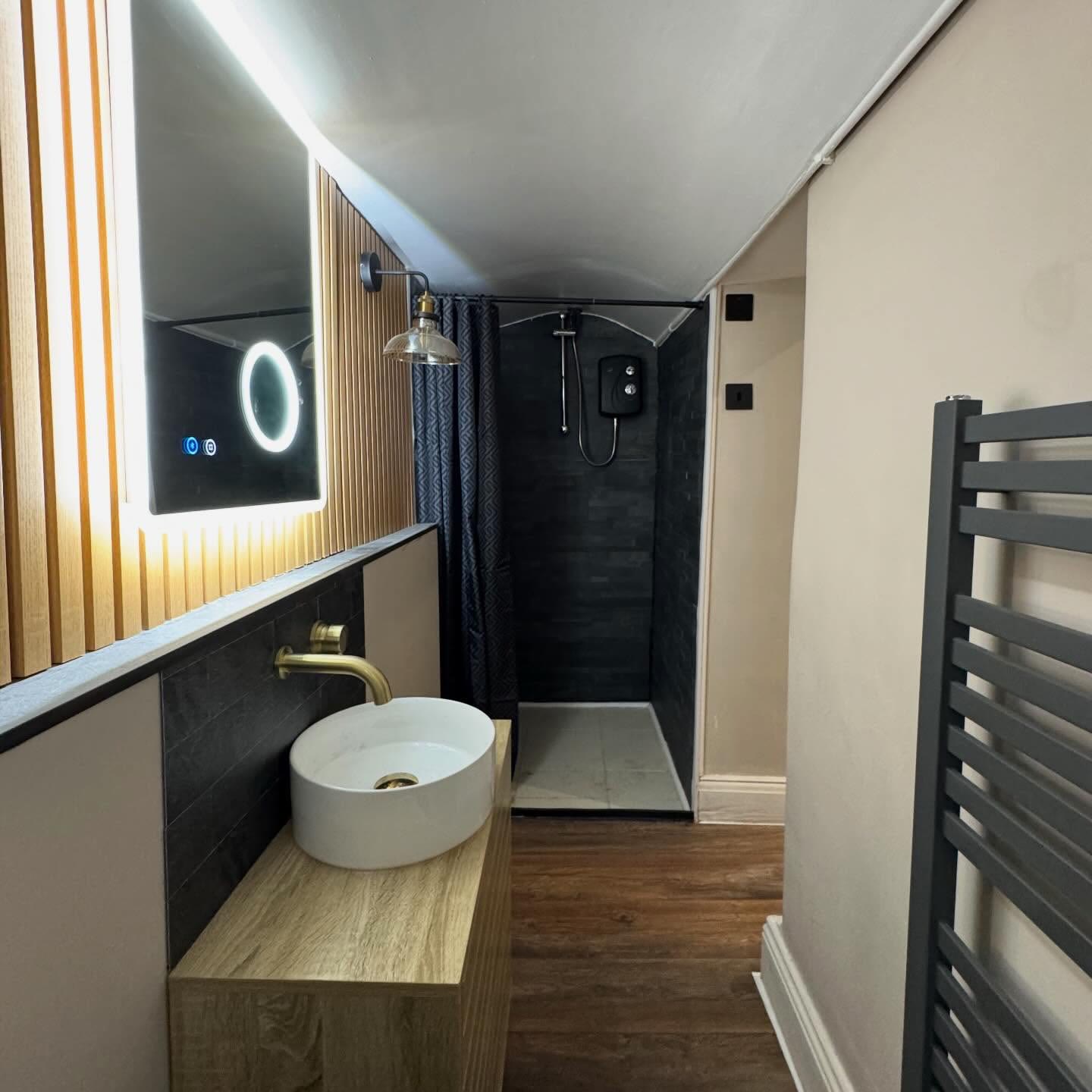
Bathrooms are small, wet, and the one room where lighting is genuinely a safety matter rather than a matter of taste. The good news is that the constraint mostly affects position: there is usually a way to get the look you want, it is just not always directly above the bath.
What the regulations decide for you
This is what we look at before ordering anything. We supply the fittings as well as installing them, so you can leave the sourcing to us: tell us the look you are after and we will find something that works in your room. If you have already bought something, send us a photo or a link and we will tell you what it needs.
The number that decides whether a fitting can legally go where you want it. Directly over a bath or in a shower needs a much higher rating than a fitting on the far wall. Tell us where you want it and we will find something rated for that position.
Almost all need a permanent supply and a fused connection behind them, not a plug. Many also have demisters and shaver sockets, which change what the circuit needs. Best decided before tiling, because the supply has to come out in exactly the right place.
Often the same job. Whether the fan runs with the light, on a timer, or on humidity affects the wiring, and a fan in a bathroom without an opening window is a building regulations requirement rather than a preference.
Around 3000K suits a bathroom: crisp enough to see properly, not clinical. Very cold light is unflattering in the one room where people look closely at themselves.
Possible, and pleasant, but the fittings have to be dimmable and correctly rated for their zone. Worth deciding early because it affects the switch position and the wiring.
What fitting one involves
Work out the zones
Measured from the bath and shower, so what can go where is settled before anything is bought or tiled.
Plan the supplies
Mirror, fan and lighting supplies positioned to come out where they need to, which on a tiled wall is a one-chance decision.
First fix before tiling
Cable run and boxes set while the walls are open. Anything missed here means lifting tiles later.
Fit, test and certificate
Fittings installed, RCD protection confirmed, the circuit tested and a certificate issued.
Got a fitting in mind?
Send a photo of it and of the room to 07557 448945 on WhatsApp. You will get a straight answer on whether it will work where you want it.
Frequently asked questions
What IP rating do I need for a bathroom light?
It depends where it is going. Inside the shower or directly over the bath needs a high rating, typically IP65. Within about two metres of them, IP44 is the usual minimum. Away from both, an ordinary fitting is generally acceptable. The zones are defined in BS 7671 and measured from the bath and shower, so the answer comes from the position, not the room.
Can I have downlights over the bath?
Yes, provided they are rated for the zone the bath sits in and the circuit has RCD protection. It is a common and perfectly safe arrangement when the right fittings are used.
Do I need a special light for a shower?
A fitting inside the shower enclosure needs to be rated for it, which usually means IP65. It is not somewhere to fit something from a general lighting range and hope.
Can you fit an illuminated mirror?
Yes. Most need a permanent supply and a fused connection behind them rather than a plug, so the supply has to come out in the right place. If the bathroom is being tiled, that is a decision to make before the tiler starts rather than after.
Does a bathroom fan have to be wired to the light?
Not necessarily. It can run with the light and overrun on a timer, or run on humidity independently. Which suits depends on the room and how it is used, and it changes the wiring, so it is worth settling early.
Having the work done
This page is about choosing a fitting. For the installation itself, including new circuits, switching and dimming, see lighting and LED installations. We cover Derbyshire and Nottinghamshire — see areas we cover.
Held by Stephen Sparham. Every job that needs one is tested and certificated. More about our qualifications