
Pendant light installation
Single drops and runs over islands and tables, set out and hung level.
In short
A pendant is a light on a flex or rod hung from the ceiling, and the thing that decides whether a run of them looks right is the setting out: spacing, height, and whether they line up with what is underneath rather than with the ceiling. Three over an island want to be evenly spaced on the island, centred on it, and hung at a height that lights the worktop without blocking the eyeline of somebody sitting at it. Getting that wrong is far more noticeable than the fitting itself.
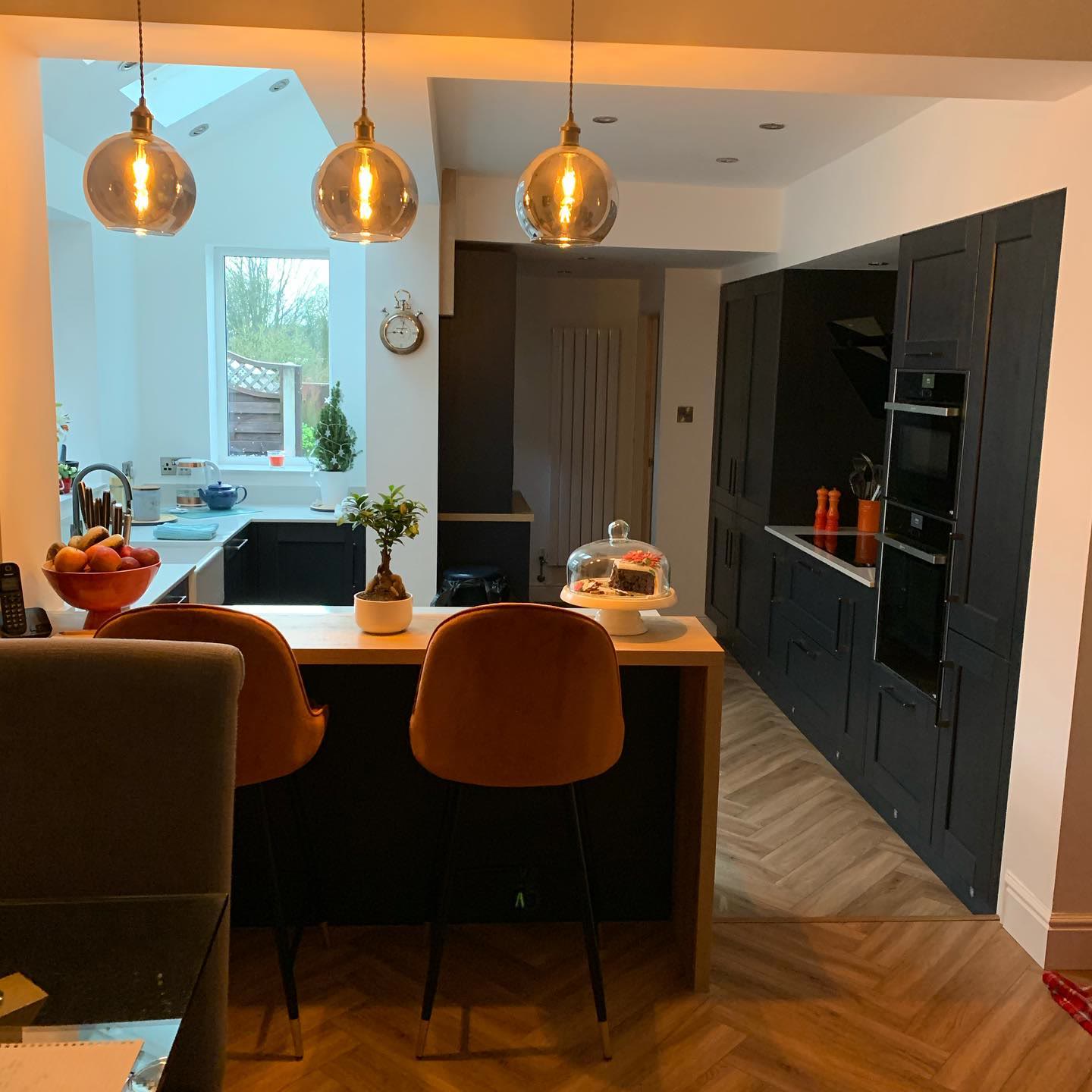
Pendants are the most common decorative fitting we put up, and the one where the difference between a careful job and a quick one is most visible. A row hung off the existing ceiling points, rather than off the island they are meant to light, never quite looks deliberate.
What decides how a run of pendants looks
This is what we look at before ordering anything. We supply the fittings as well as installing them, so you can leave the sourcing to us: tell us the look you are after and we will find something that works in your room. If you have already bought something, send us a photo or a link and we will tell you what it needs.
Three over a two-metre island is the usual answer; two on a shorter run. Better to decide the number against the actual measurement than to buy a set and make it fit.
Almost all pendants have an adjustable flex or rod, but check the range. Over an island you generally want the bottom of the shade around 75 to 90cm above the worktop, and higher in a room with a low ceiling.
An open-bottomed shade throws light down onto the worktop. A fully enclosed opal globe glows and lights the room more softly, which looks lovely and is less useful for chopping on.
Pendants over an island want to be switchable separately from the downlights, or the room only has one setting. Worth deciding before the wiring is done, not after.
Evenly spaced pendants rarely line up with the joists. Where they do not, the fixings need timber putting in between, which is quick with the ceiling open and more of a job once it is finished.
What fitting one involves
Set the positions out
Marked against the island or table, measured, and checked from standing and sitting height before anything is cut or fixed.
Sort the fixings
Noggins between the joists where the position does not land on one, so each pendant is hung off timber.
Wire and switch
Run back to the board or the existing circuit, with the pendants switched as their own group so the room can be lit more than one way.
Hang, level and set the height
Each drop set to the same height, checked along the run by eye as well as by tape, because a run that is level on paper and out by a centimetre is the thing people see.
Got a fitting in mind?
Send a photo of it and of the room to 07557 448945 on WhatsApp. You will get a straight answer on whether it will work where you want it.
Frequently asked questions
How many pendants do I need over my island?
Three is the usual answer over an island of about two metres, two over something shorter. What matters more is that they are evenly spaced along the island and centred on it, rather than spaced to suit the ceiling.
How high should pendants hang over a worktop?
Around 75 to 90cm from the worktop to the bottom of the shade is the normal range. Lower if it is purely decorative and nobody needs to see across it, higher in a room with a low ceiling or where people will be sitting facing each other.
Can you add pendants where there is no ceiling point?
Yes. New points are run from the existing lighting circuit, and how involved that is depends on access from above. It is much easier while a ceiling is open, so it is worth raising early if a kitchen is being done.
Will they line up with my existing downlights?
Not automatically, and forcing them to is usually the wrong call. Pendants should line up with the island or table; downlights should be set out around the tasks in the room. If the two fight, it is generally the downlights that want moving.
Having the work done
This page is about choosing a fitting. For the installation itself, including new circuits, switching and dimming, see lighting and LED installations. We cover Derbyshire and Nottinghamshire — see areas we cover.
Held by Stephen Sparham. Every job that needs one is tested and certificated. More about our qualifications