
Wall lights and picture lights
Wall fittings, reading lights and picture lights, wired in properly.
In short
Wall lights do the job a ceiling light cannot: they put light at eye level and take the flatness out of a room. The practical question is almost always how the cable gets there. On a stud wall it is straightforward; on a solid wall it means chasing, which is fine while a room is being decorated and disruptive once it is finished. Height matters too, and the usual mistake is fitting them too high.
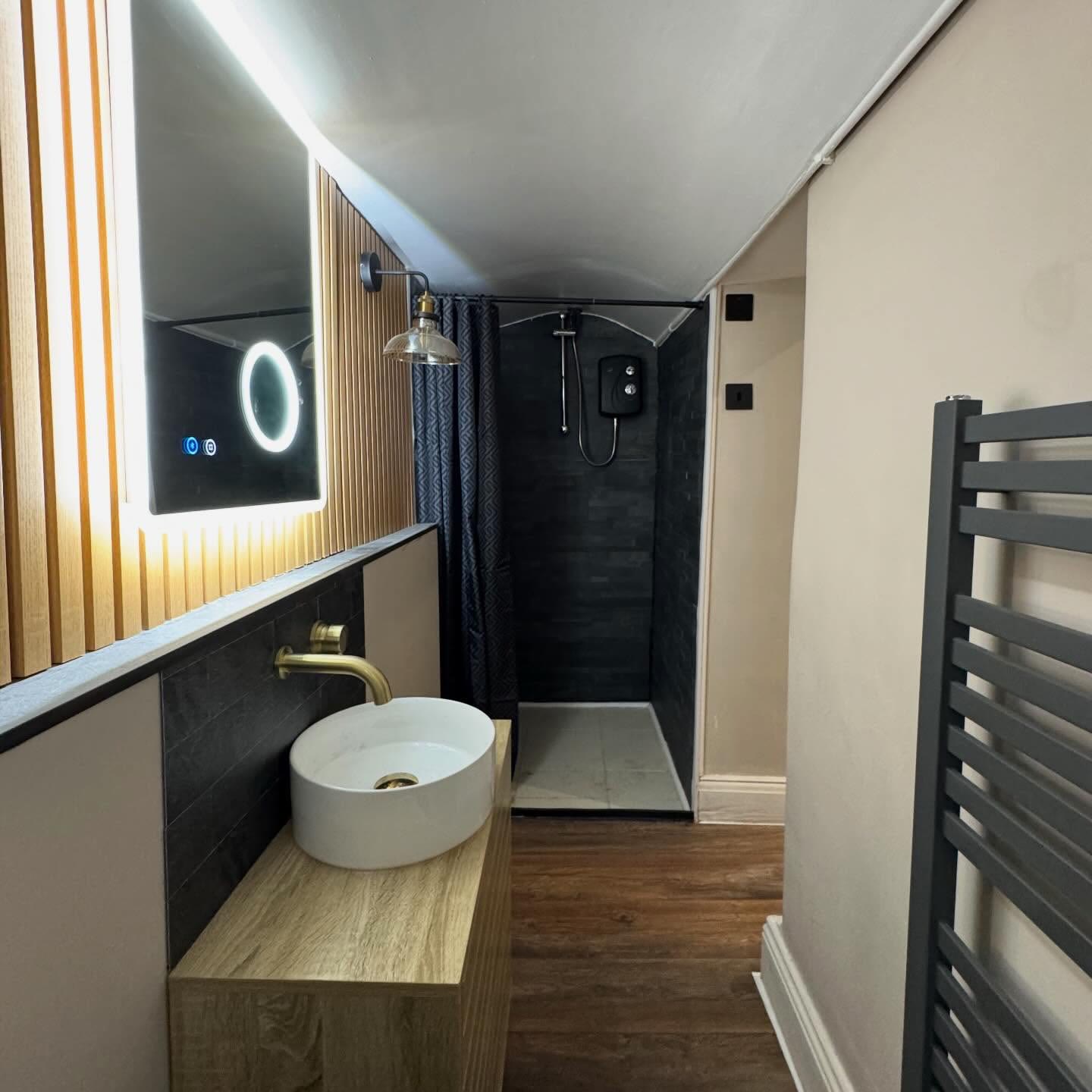
A room lit only from the ceiling looks like a room lit only from the ceiling. Wall lights are what makes an evening setting possible, and they are also the fitting most worth planning before the plasterer arrives rather than after.
What decides where wall lights can go
This is what we look at before ordering anything. We supply the fittings as well as installing them, so you can leave the sourcing to us: tell us the look you are after and we will find something that works in your room. If you have already bought something, send us a photo or a link and we will tell you what it needs.
Around 1.5 to 1.7m from the floor suits most wall lights in a living room, a little lower either side of a bed. Too high and they light the ceiling; too low and you look into the lamp when seated.
Uplighters wash the ceiling and make a room feel taller. Downlighters pool light on the wall. Ones that do both are the most flexible. It changes the feel of a room far more than the style of the fitting does.
Wall lights want their own switch, ideally by the door with the main light. Switched from the fitting itself means walking round the room turning them on individually.
Straightforward to run cable in a stud wall. A solid wall means chasing and making good, which is quick during a refurbishment and a much bigger job in a finished room.
Wall lights are usually fitted in pairs and any difference in height or spacing between them is instantly visible on a flat wall. Worth setting out carefully.
What fitting one involves
Agree the positions
Marked on the wall and looked at from where you sit, not from where the ladder is. Pairs measured off a common datum so they match.
Work out the cable route
From the existing lighting circuit, through the stud or chased into the wall, kept in the safe zones so a future picture hook does not find it.
Fit and switch
Back boxes set flush, fittings mounted level, and switching arranged so the wall lights work independently of the main light.
Make good and test
Chases filled, the circuit tested and certificated, and the room left clean.
Got a fitting in mind?
Send a photo of it and of the room to 07557 448945 on WhatsApp. You will get a straight answer on whether it will work where you want it.
Frequently asked questions
How high should wall lights be fitted?
Around 1.5 to 1.7m from the floor is the normal range in a living room, and a little lower either side of a bed where they are being used for reading. The test is whether you can see into the lamp from a seated position; if you can, they are too low.
Can you add wall lights to a finished room?
Yes, though on a solid wall it means chasing the plaster and making good afterwards, so there is decorating to follow. On a stud wall it is far less disruptive. Either way it is much easier while a room is being redecorated.
Do wall lights need their own switch?
They do not have to, but a room with everything on one switch only has one setting. Putting them on a separate switch, ideally by the door, is what makes them useful in the evening rather than just decorative.
Can you fit a picture light?
Yes. The choice is between a discreet fixed supply behind the picture, which looks best and needs deciding before decorating, and a surface fitting, which can go in at any point. Worth talking through before the wall is painted.
Having the work done
This page is about choosing a fitting. For the installation itself, including new circuits, switching and dimming, see lighting and LED installations. We cover Derbyshire and Nottinghamshire — see areas we cover.
Held by Stephen Sparham. Every job that needs one is tested and certificated. More about our qualifications